Showing posts with label Materials. Show all posts

Sunday, 31 May 2015

#4 Bharatanatyam is evenly divided between three elements Nritta, Nritya and Natya


Supporting Information and examples

There are 3 aspects in Indian Classical Dance:

a) Nritta - this is pure dance. Where the movements are intended to give
pleasure without conveying any meaning.

b) Nritya - this is dance with facial expression and hand gestures to convey 
meaning.

c) Natya - this is called drama using dance movements.


How it relates to dancers & audience

There are 9 Rasas, basic emotions, expressed in indian dance. The term Rasa refers to the emotions that have to be expressed, and the emotions that have to be felt by the audience (according to the words of the songs that accompanies the dance)


© Pushpaarpanam Dance Group. All rights reserved.


#3 Navarasa - The Nine Moods


  • Details about this topic
  • Supporting information and examples
  • How it relates to dancers and audience
Sringaara ------ (erotic love)

Veeraa---------- (valour)

Karuna----------(pathos)

Adbhuta---------(wonderment)

Haasya-----------(satire)

Bhayaanaka-----(horror)

Beebhatsa-------(disgust)

Roudraa---------(fury)

Shaanta----------(serenity)

© Pushpaarpanam Dance Group. All rights reserved.

Thursday, 28 May 2015

#16, #19, #23 Bharatanatyam Photo's

Bharatanatyam Photo's


1 to 5


10 to 18

© Pushpaarpanam Dance Group. All rights reserved.

#5 Body Lotus

Body Lotus (Flower)


© Pushpaarpanam Dance Group. All rights reserved.

#20 Paravaladavu / Visharuadavu / Marditaadavu are same name as (Ta Tai Tai Ta)

Paravaladavu In Bharatanatyam (Ta Tai Tai Ta Dhit Tai Tai Ta)
03

steps 4..5

steps 6..7

step 8

© Pushpaarpanam Dance Group. All rights reserved.

#18 Nattuadavu In Bharatanatyam


Nattuadavu In Bharatanatyam (Tai yum tat tat)
02
steps 1..2..3

steps 4..5

steps 6..7

step 8


© Pushpaarpanam Dance Group. All rights reserved.


Tuesday, 23 September 2014

Thursday, 26 June 2014

#12 Single Hand Mudras / Asamyuta Hastas

Study Materials

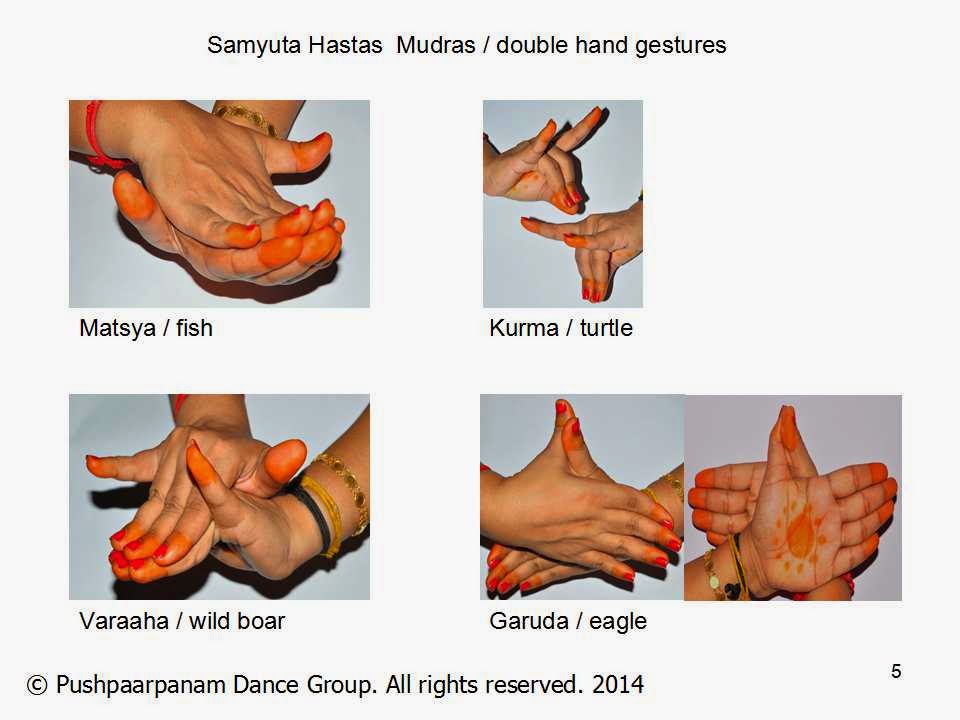
In Bharatanatayam there are about 32 single hand root mudras called as Asamyukta Hasta...One of the most striking features of Indian classical dance is the use of hand gestures. Actually speaking in order to convey meaning and expressions, hand gestures make a prominent existence. However hand gestures known as nritta hastas are employed for the sake of beauty and decorative purposes while performing nritta.
Information obtained from Wikipedia, the free encyclopedia


© Pushpaarpanam Dance Group. All rights reserved.


Wednesday, 25 June 2014

#13 Yoga

Study Material
Surya Namaskaram


© Pushpaarpanam Dance Group. All rights reserved.


Monday, 16 June 2014

#6, #7 Postures of standing Position (Mandalam) and Postures of sitting (Aramandi)

Study Material


© Pushpaarpanam Dance Group. All rights reserved

#20, #21 Eyes, Head and Neck Movement

Study Material


Slokas:-
Samam, alokitha, saachi, pralokitha, nimilithe,Ullokitha,
anuvrththecha and chaivaavalookitham.

MEANINGS;
1.Samam - Look Straight
2.aalokitham - Rolling eyes
3.saachi - Glancing at one corner of the eyes (one side)
4.pralookitha - Moving eyes side to side(wide)
5.nimilithe - Half closed eyes
6.Ullokitha - Looking Up
7.Aanuvrththecha - Looking up and down(in anger)
8.Avalookitham - looking down

© 2013-1015 Pushpaarpanam Dance Group. All rights reserved


Dirsthi on Eyes

 Study Materials


© Pushpaarpanam Dance Group. All rights reserved

Wednesday, 22 January 2014

#11 Positions of legs (10 types)

1..2..3

4..5..6

7..8..9..10


© Pushpaarpanam Dance Group. All rights reserved.

#15 Tattuadavu In Bharatanatyam (Taiya Tai)


Tattuadavu In Bharatanatyam
01


© Pushpaarpanam Dance Group. All rights reserved.

Monday, 23 September 2013

Exercise

Bow


Bow pose (Dhanurasana), keeps your back, muscles strong and your spine flexible. It expands your chest and helps you to breathe more deeply. Deep breathing is good for your health.


Bridge

Bridge pose (Setubandhasana), it will strengthens the back muscles, stretch to chest, neck and spine, calms the brain, reducing anxiety, stress and depression.


Camel
Camel pose (Ustrasana), relieving back problems, opens rib cage, lungs and digestive system. Image and information obtained from helpforibs.com and


Stretching